Sunday, 24 March 2013

Monday, 18 March 2013
Q4: Who would be the audience for my media product?

 As much as I like 'Evito',
I cannot see the stark, rugged and often unfriendly aesthetics of the film appealing to a mass market. Having said that I shouldn't underestimate the popularity of similarly toned thrillers. At a guess, I would say that the main market of 'Evito' is tilted slightly more towards a male audience than it is a female though I wouldn't market too strongly on that gap. Though in no way can 'Evito' be called an action film, I believe that it would appeal more to a younger audience than an older even though it incorporates more mature and gritty themes and visuals than might be deemed suitable - this is where I believe the divide comes from: it is ultimately an more indie and arty film (visually as oppose to thematically) though it inhabits a much more mainstream genre. To more accurately judge the expected audience of 'Evito' I researched the target markets and the audience of similar thrillers and found that, common to all of them, that both the main watchers and highest raters belonged - as I had expected - to a male audience between the ages of 18-29. What attracts the audience most, I have concluded, is exactly what I thought might repel them - the gritty visuals, the extensive natural locations, the fact that 'Evito' gives the impression of being the sort of film that it sounds smart to talk about. Surprisingly I did find that the difference between men and woman viewers was dramatically different, hinting that the darker tone appeals more to men, or that the representational issues within 'Evito' are more easily identifiable to men.
Sunday, 10 March 2013
Q7: Looking back at my preliminary task, what do you feel you have learnt in the progression from it to the full project?
When we shot our preliminary task, the only planning we had was a selection of photos and a rough script, neither of which we stuck to especially rigidly. As a result what would now have taken us roughly half an hour at most to film took us the best part of an hour to shoot, so one of the biggest things that I learned from doing to the preliminary task was the value of planning and story boarding so that we knew exactly what to do when and it didn't end up taking twice the expected time. I feel that we managed this very well with shooting 'Evito'. Despite losing each other for the best part of the morning on the expanses of Welles' beach we managed to gather around quarter of an hour of footage within the space of two or three hours at most including the long times we spent moving from location to location. This was entirely thanks to the fact that we knew exactly what shot we wanted and where. I feel that we have stuck very closely to our story board and that the story board - above our impatience and naivety - was the key to being able to shoot as quickly and as efficiently as we did. We rarely felt the need to re-shoot unless it was to specifically change the action within the shot. Whereas in our preliminary task most of the shots the final edit was made out of were second or even third attempts, the majority of the clips that make up 'Evito' are first takes.
As well as the value of time management in the shoot, we were also more disciplined when it came to editing together our final and draft cuts. When we had edited the preliminary task, the technology was new to most of us so we spent time experimenting and adding in new and exciting effects, none of which survived for long. The second time we came to edit, just like the shooting, we had a clear idea of the sounds, the shot lengths and the actual shots that we wanted to use and where, which was, again, mostly thanks to the story board.
Though we didn't learn it during the preliminary task, when it came of filming 'Evito' we appreciated the value of filler and extra shots. This may well have happened inadvertently as when are group were trying to find one another for hours on end we, at points, came across scenery too amazing not to shoot. The opening shot, for example, of the sand racing across the beach, was shot purely by accident and it is not alone. When it came to the end of the shoot at least half of what we had shot, if not more, were few second snippets of forest, beach and the sea. Choosing which ones to use and which ones to discard turned out to be one of the hardest parts of the whole project. We shot the film in two separate sessions: first on the beach and then at a location in the school a few days afterwards, by which time we had realized the benefit of shooting more than we needed. The second shoot was quite unique in that as there would be no dialogue and no 'natural' sound either, we were free to advise and direct our actors while the camera was rolling. we ended up with two ten minute chunks of film both of which contained countless amounts of varying action shot from different lengths and heights. From memory only roughly five different actions within the fives-courts out of the however many were actually used.
It was not a conscious decision on anyone's part but it could be said that because we'd had such a difficult time with the dialogue in the preliminary task, this is what led us to avoid it all together in 'Evito'. What we did include in 'Evito' which we hadn't before was sound effects. Personally I wanted to avoid overusing artificial effects and improvements as I was worried that it would take too long and would, more importantly, detract from the rough, authentic look of the film (I take credit for the lack of anything more interesting than a fade out where the titles are concerned). However sound effects were an exception as what we needed - namely static - was not going to intrude on the more natural areas of the film and as a result I am now able to add sound effects to a film.
As a group we were all fairly committed to the ideas we had come up with and as a result we found it difficult to change some of the areas we were advised to in feedback, both from the teacher and other students. Perhaps then this was the most difficult aspect of productions as, although the feedback we got was mostly very good, the few areas flagged up as in need of refining or changing we were, especially where the storyline itself was concerned, reluctant to change and fairly minimal in our approach. However when placed next to our preliminary task I can clearly see that 'Evito' is by far the superior of the two and the time management skills learned from the preliminary task were invaluable in achieving this.
Q1: In what ways does my media project use, develop or challenge forms and conventions of real media products?
All through the planning and composing stages of our thriller opening, I always thought of it as quite exceptional and unique especially for the genre. Though undoubtedly a thriller, I feel that we have, on more than one occasion side-stepped across the genre's into both horror and something verging on fantasy (I say this only because Karamel Kanu's mysterious re-apparitions around the set). However i do not feel as though we ever lost our direction and throughout the entire process we kept rigidly to our basic, initial ideas, many of which were influenced by numerous thriller films...
 To the left is the opening shot of our film. Though this was an entirely improvised shot, it has become one of our best. In the far right is a vanishing point which gives the impression that the forest runs on and on for an untold distance. In this respect we found it very similar to a shot in the film 'Essex Boys' where an enemy of the protagonists is dumped in a bleak and seemingly never ending flat. Another very similar and perhaps more influential series of shots are the wide, establishing shots that open the film 'No Country For Old Men' of the open desert landscape. Similar too to 'No Country...' our group valued the effect of landscape and setting of the film. Unlike many other groups, our film was shot on the wide open beaches and enclosed forests. The effect was ultimately one of intimidation and helplessness and, as there was no dialogue in our film, I don't think that this effect could have been achieved without these bleak establishing shots.
 The lighting in our film was entirely natural and turned out very successfully. We have not made an attempt to subvert the traditional connotations of lighting and found it worked in our favour. In the picture to the right is on of the best examples in the contrast of light. The tops of the trees and the beach in the background are lit up with a cold, bright light while the tree trunks, pines and snow on the ground are cast in shadow. Furthermore the presence of the snow in darkened foreground makes the whole scene appear cold and, as this is hardly pleasant looking snow, also manages to add a more bitter feel to the picture. As we naturally associate darkness with danger and fear, this shot in particular emphasizes the danger and fear lurking within the trees. The most alike in use of lighting and its effects in this way is film noir. Though noir was not an immediate influence on our film in terms of location and story, the use of lighting within films such as 'The Third Man' and neo-noir opening of 'Casino Royale' can be linked directly to shots such as this found, albeit rarely, within our thriller.
 The font used for the title of our film is not traditional within thrillers and is a good example of the ways in which we have both challenged aspects of the genre and mixed in others. At a glance, this title may well be thought to be more suited to a horror film and though ours undoubtedly at times verges on the genre, it is inescapably a thriller. The reasoning behind the font was that it was the one we found that best fitted in with the aesthetic as oppose to the content of our film. As I have already mentioned, our group valued setting very highly and I feel that this position was prevalent throughout most, if not all, of the editing process from sound editing to these titles. If nothing else then the font and the name itself furthers the enigma developed throughout the two-minute duration as it is not a typically thriller font.
 The shot types used in our film were one of the components that we stuck to entirely and are arguably the most thriller-esque part of our film. In this particular shot (to the right) a mix of the camera and the lighting traps Gerhard against the forest floor and the high angle immediately establishes him as a threatened and a vulnerable character. In essence it is very similar to (and throughout shooting i certainly had in mind) a shot from Hitchcock's 'Shadow of Doubt' that uses the overview and the 'stillness' of the high-angle to create a feeling of doubt, loneliness and, above all, danger. The content of this particular shot, in which Gerhard stops, turns and looks around the empty forest after hearing the snap of a twig, also helps contribute to the fear and the unease this scene was intended to establish.
 The scenes in which Gerhard is trapped are the most immediate shots that could be compared to horror films. Twinned with the harsh, invasive static that claws at the listeners' ears at this point, the objective of these scenes were to totally unnerve the audience. Despite this, the immediate influence on composing this shot in the pre-production stages, was a very similar scene from the TV Thriller 'Homeland' in which a security camera watches a a shell-shocked Bordy shelter in the corner of the room. Another major influence for these flashes was the film 'Dead Man's Shoes' (who's presence can be felt in almost every part of the film) where there are abstract flashes forwards and back in the narrative that mark the film's most intense scenes. As well as this, the flash backs in certified thrillers such as the Bourne trilogy are also not dissimilar to the cuts found within our film which, as oppose to creating a story parallel to our primary narrative, feature almost random shots from all over the place.
 Gerhard's costume was a particular point of interest through the planning stages. As there was to be no dialogue, the look of the characters was the only way we had to establish their personality. However I feel that we managed this very successfully. Gerhard's costume is a mix of practicality and self fashioned style and egocentric vanity as the comparisons between his shoes and his hoody marked with a (hopefully vaguely humorous) play on his name establishes his arrogance and his lowliness - nothing he wears is especially nice. The mentality behind his wardrobe clashed with the typical prejudices around his class can be likened to the characters of Jason in 'Essex Boys' and Duke from 'Layer Cake' and it was certainly these two characters we had most in mind during the planning of Gerhard.
 If I had to name the four films that have had the greatest influence on the creation of 'Evito' then I would name 'Dead Man's Shoes' in terms of character and theme, 'Essex Boys' in terms of atmosphere, 'No Country for Old Men' in terms of tone and shots and 'The Blair Witch Project' in terms of the overall aesthetic and design of the film. When i talk about crossing over into the horror genre in places, it is the latter film which I am most commonly referring to. Even when we thought up the basic ideas of 'Evito' the comparisons were hard to ignore though as I have said earlier, as much as we might borrow from the horror genre, we manage to avoid succumbing wholly to it, I see the borrowing as merely a development of the genre. One of the most 'borrowed' shots is on the right where Gerhard first spots Karamel Kanu. The camera leading us to this point is deliberately rather shaky and in places unfocused in order to compound and increase the panic and fear the character's sudden, and this time very visible, apparition inspires in our protagonist. Here Karamel is stood on top of the slope that Gerhard presumably intended to leave the forest by and, though the sunlight somewhat erodes the edges of his character, the aim was to make him block out the sunlight and therefore block out escape. Also key in this scene the camera moves interdependently of the characters, panning up from Gerhard as if following his line of sight and this places the audience in the film in the way 'shaky-cam' horror films such as 'The Blair Witch Project', 'Cloverfield' and 'Paranormal Activity' do in order to make the fear seem very, very real.
 The narrative structure of our film is very peculiar as there are two series of shots running parallel to one another for the duration of the the opening two minutes. Though there perhaps isn't enough narrative change to liken the film to Tarantino picture, 'Evito' certainly doesn't conform to the traditional form of most thriller openings and could almost be a short film independent of a following hour and a half. There is a very clear turning point marked by the scene on the right in which the character of Gerhard very literally turns around and starts walking the opposite direction. I do not feel as though the pace in which 'Evito' moves to be especially typical of this sort of thriller and would therefore argue that it is one of the ways in which we challenge the conventions of other thriller films.
 On the left is the climatic (though not final) shot of our thriller's opening. It is one of the most enigmatic and satisfying shots we filmed and significant even outside the context of the plot. during the 'fives-courts' shoot the camera was deliberately wonky in order to, like almost every technique we used, create an atmosphere of uneasiness and tension. I for one find the shot very similar to several found in film-noir, notably in 'The Third Man' where Harry Lime is peering up the stairwell and the shot is partially obscured, rendering the viewer somewhat ignorant of the occurrences - something most films strive to avoid. Originally we wanted Karamel Kanu to be partly out of shot, but we decided against this when we realized it could be seen as a mistake to those unable to understand the inner workings of our mind, however this would have been done to ultimately achieve the same effect. Also as this is all but the closing shot in what we hoped would be an unnerving opening, the importance of the high-angle is to make the viewer seem, very subtlety, more welcome to observe the actions of Karamel Kanu who is now for once below them and is one of the most quietly encouraging techniques we used to invite the audience to keep watching.
Thursday, 28 February 2013
Evito [rough cut]
Generally I, along with my group, am very pleased with the way this first rough edit has turned out. We realize of course that it is not perfect and that there is more editing in store for it and certain features are in need of refining or changing. To name just one of hand, the title of the film is, at present, only slightly easier to see than the hidden Karamel Kanu's in various shots. Therefore the title will need to be changed, we plan to do this be subtly shadowing it in order to make the pale words stand out more. Yet criticism aside, I feel that the editing process has been extremely successful and that we have made significant progress towards a final cut.
Monday, 28 January 2013
Our Storyboard

We used the post-it notes that we had to briefly explain the ideas we had outlined in our treatment and our break down of characters. Though the storyboard did purvey our basic ideas we do not expect to stick religiously to it as at the time of filming we fully expect to discover new and brilliant shot ideas in the environment of our shoot.
Tuesday, 8 January 2013
Monday, 7 January 2013
Voiceovers and cahracter introductions in Lock, Stock and Two Smoking Barrels and Layer Cake
The first thing to take into account when comparing the way voiceovers are used in both of these films is the style of both films – Matthew Vaughn’s Layer Cake is a deliberately smooth, cool and stylish film that the director himself said was deliberately a detraction away from the gritty and grimy British gangster films that had previously dominated the British off chute of the genre. By no coincidence that is the exact same grimy British gangster film that Lock, Stock is grouped under. With its over exposed film and its over the top, hilariously ridiculous narrative, Guy Richey achieves in making a very different but at the same time very similar film to Layer Cake.
 The narrators in both are also characters in the film. In Layer Cake the nameless main character, played by Daniel Craig, narrates the film, yet the only two instances of narration appear at the end and at the beginning of the film. This achieves an odd effect – it should give Craig’s character an almost omniscient status, but instead it gives him an almost fragile one: as an audience we start to wonder why, throughout the rest of the film, Craig isn't leading us step by step through the narrative. Ultimately this conjures a feeling of unease and vulnerability. However this may just be a inadvertent technique employed by Vaughn as, after all, it would detract a lot of the gradually building tension if his main character was going to reassure the audience of his mind state at every given moment.
In Lock, Stock on the other hand the narrator assumes a far smaller role in the film as the barman of the local pub and only has any interaction with the characters at two points in the entire film, yet somehow he knows their thoughts and feelings intimately. Though it could be said that there is a story in itself in that, I believe that Richey made this so simply to add the quirk of having the narrator a minor character as seen in – the admittedly incomparable – The Big Lebowski. However the fact that the narrator remains a character when he could very easily not be does mean that Richey can use his presence on screen to signify the end of particular plot developments – when the characters are around the omniscient narrator nothing that significant nor debilitating can ever really befall them.
 |
| Alan Ford as Alan, the narrator of Lock, Stock and Two Smoking Barrels |
However the content of both narrations are fairly similar in essence. Both of the narrators, regardless of roles within the film, talk to the audience on the level and seem to normalise both of the businesses explored in the films, namely the drug trade and petty (and extreme) thievery. Craig’s narration in fact makes us almost feel as though we’re involved in the operations. The most noticeable similarity is the style in which characters are introduced. Whereas in films in this genre without any voiceovers at all e.g. Pulp Fiction, characters are established mainly through their actions and dialogue which as a result has to be more or less immediate, in a film like this with voiceovers, the narrator can do all the talking, telling us the backstory and the general demeanour of the characters as we see with, just for two examples, Tom Hardy’s Clarky in Layer Cake and Dexter Fletcher as Soap in Lock, Stock. Yet that is not to say that the characters themselves have to do no work at all – it always helps if we can see an example of the character’s personality as we are being told about them and is this perhaps best exhibited by real life ex-criminal Lenny McLean in his role as Barry The Baptist in Lock, Stock and Two Smoking Barrels.
Monday, 17 December 2012
Treatment
We fade into a forest, illuminated by the cold mid winter
dawn. A man is seen venturing through the woods. The leaves crunch beneath his
feet, the snow gathers on his toes.
Twigs snap in the background; he thinks nothing of it.
Seconds pass, and he begins to dwell on the sound.
fearing a presence, he takes a brief look around, as if someone was there.
He reaches down to bury the contents of his pocket, wrapped in a small plastic bag.
In the background, a suited man wearing a venetian mask appears, just watching.
He stands up again, the venetian masked man in the distance behind him.
he looks around, noticing the man.
He promptly starts walking forward to leave the forest.
Everytime he turns to look around, the man is closer than before, but standing perfectly still, in the same position as ever.
we cut to a darkly lit scene of him sitting in a room, evidently trapped.
It begins alternating between him walking through the forest, slowly being caught up to, and him locked in the room.
The final scenes involve him stopping, with the masked man less than a metre away, staring at the back of his head.
It cuts to the dark room again, the man is sitting in the corner, clutching his knees, whilst the masked man is staring at him, looming over.
It ends as he looks up to the camera.
Twigs snap in the background; he thinks nothing of it.
Seconds pass, and he begins to dwell on the sound.
fearing a presence, he takes a brief look around, as if someone was there.
He reaches down to bury the contents of his pocket, wrapped in a small plastic bag.
In the background, a suited man wearing a venetian mask appears, just watching.
He stands up again, the venetian masked man in the distance behind him.
he looks around, noticing the man.
He promptly starts walking forward to leave the forest.
Everytime he turns to look around, the man is closer than before, but standing perfectly still, in the same position as ever.
we cut to a darkly lit scene of him sitting in a room, evidently trapped.
It begins alternating between him walking through the forest, slowly being caught up to, and him locked in the room.
The final scenes involve him stopping, with the masked man less than a metre away, staring at the back of his head.
It cuts to the dark room again, the man is sitting in the corner, clutching his knees, whilst the masked man is staring at him, looming over.
It ends as he looks up to the camera.
Sunday, 16 December 2012
What do directors try to establish in the opening of thrillers?
In the opening of thriller films, directors can use a variety of different techniques to captivate the audience and draw them into the film. Though these methods vary, it is important to note that the aim is always to engage head on with the audience. By definition, thrillers feed off suspense and mystery and therefore this is what the director will often hope to establish in the opening few minutes. This can be done, as in Casino Royale, by dropping the audience in mid-way through a running case/narrative, or it can be done, in a TV series like Whitechapel, by dropping the viewer immediately into the story and at once giving them a dark, shadowy mystery to solve, in this particular case who the dark silhouette standing in the gate is and what relationship the teenager with the gashed throat has to them. Similarly Double Idemnity opens with a shocking revelation that traditionally would be found at the end of the film but instead is located at the start; this draws the audience in the same way a punch in the face would snatch up someone’s attention.
Arguably though, the most important thing to do in a story before it truly starts is the location. This is done extensively in LA Confidential where a roughly five minute exposition explains carefully both the physical and the moral setting of the film and, though it gives away nothing of the storyline – which doesn’t truly start until almost half an hour into the film – this opening skilfully sets the tone and, in this case at least, the tempo for the rest of the movie.
_poster.jpg) Yet the primary tools of a story are the characters it involves and oddly this is not always prioritised in the opening few minutes of the film, The Third Man, for example, spends a lot of time explaining about the lawlessness of post war Vienna and doesn’t get onto introducing the characters until relatively far in. In contrast to this, Se7en uses meticulous detail to establish the steely façade of central character Detective Somerset (of course as the film progresses we see far more of this character’s inner persona come through). David Fincher, the film’s director, goes about this very simply but very effectively, showing how ordered and logically placed everything in the detective’s apartment is and leaving it mainly up to the viewer to deduce what they can from this. Comparisons can be drawn between the routine opening scenes of Se7en and the scenes in Whitechapel that establish its own lead character.
Yet the primary tools of a story are the characters it involves and oddly this is not always prioritised in the opening few minutes of the film, The Third Man, for example, spends a lot of time explaining about the lawlessness of post war Vienna and doesn’t get onto introducing the characters until relatively far in. In contrast to this, Se7en uses meticulous detail to establish the steely façade of central character Detective Somerset (of course as the film progresses we see far more of this character’s inner persona come through). David Fincher, the film’s director, goes about this very simply but very effectively, showing how ordered and logically placed everything in the detective’s apartment is and leaving it mainly up to the viewer to deduce what they can from this. Comparisons can be drawn between the routine opening scenes of Se7en and the scenes in Whitechapel that establish its own lead character. Of course, as much as everything else, the tone is very important to set up in the opening stages of a movie. As I have already said, this is very successfully done in Se7en and LA Confidential, but maybe one of the best examples of tone setting is the murky and violent Essex Boys that uses everything from pale and grainy lights to ragged voices drowned out by the suburban hysteria that surrounds them and shots that don’t quite show you everything to establish that if there’s one thing this film isn't then it’s nice. Similarly in the much lighter Lock, Stock and Two Smoking Barrels, the film appears is over exposed, giving the picture a dull, almost sepia appearance, but at the same time almost cartoonish that coincides with the films comparatively light spirit and humour. Layer Cake, as oppose to this, makes its opening sequences look very cool, smooth and professional which sets the tone for the rest of the movie just as the grainy footage and over the top slow motion sequences do in Lock, Stock.
 It might seem a little odd to say that thriller directors seek to establish the genre in the opening of thrillers, but this is because it is the easiest thing to establish. To make someone assume they're watching a thriller, all that really needs to be done is for someone to mention criminal activity and have a shot of a gun or a dead body. Of course, some classic thrillers, Rear Window springs to mind, doesn’t quite go about doing this in that way, but in that instance the tension is established by the claustrophobic camera work. However, normally the genre can be established just through a combination of everything else the director tries to establish in a thriller opening.
Themes, however, quite separate from storyline, are often much more easily established. The most common found in thrillers of this kind tend to corruption, crime, deceit, lust and alienation/isolation, all of which are present in a film like Se7en although only the crime and alienation are explored in the opening with the character of Somerset and dark city that he inhabits. In the game LA Noire, which is about as close to a film as a game can get, themes are prioritised in the surprisingly slow moving opening cut screen. It talks of the ideas of dreams – Hollywood – and the reputation that the city has and the reality that counter balances this, perhaps not impacting much on the plot, but definitely opening up a theme present throughout the rest of the game.
Thursday, 29 November 2012
Monday, 19 November 2012
How Has New Technology Changed the Film Industry?
To some extent a film is only as successful as the technology it is made with and the money with which it is funded. Quality becomes somewhat irrelevant when the budget is big enough, take the examples of Michael Bay's Transformer movies and a film like Submarine or Kill List. It doesn't matter that the latter two independent films are by far the superior to Bay's monstrosities, but the fact that the Transformer films were made with superior effects, an almost endless budget and a high profile director immediately guarantees the film success.
The last decade especially has been revolutionary for film production with the introduction of truly massive special effects in pioneering effects driven films like Independence Day and the Lord of the Rings trilogy both of which were box office smash hits and reinvigorated the cinema experience. Films like Avatar, that spearheaded the revival of 3D, had the same effect, helping cinema climb out of the low it had been in at the start of the decade and the mid 90’s. However, perhaps it is not surprising that effects films are now the highest grossers. It is now very easy to watch a film from the comfort of your own home and as a result cinema – and films you view at the cinema – have become something of an occasion again. As Matthew Vaughn, director of such high profile cult films as Layer Cake and Kick Ass, says “I’m a big believer that if you're going to pay your six quid, you're entitled to see a movie”. What Vaughn is actually saying here is that only certain types of genres are truly deserving of a cinematic touch. For example, to use recent releases, films like Skyfall and Paranormal Activity 4 are going to be more of an experience to see in the cinema than a slow moving drama such as Anna Karenina or Tinker, Tailor, Soldier Spy. Of course there have been exceptions to this rule: independent films like Once and This Is England have enjoyed almost unbelievable levels of success and attention, but it’s wrong to sample these kinds of films and call them regular occurrences – it is still the high budget films that bring in the most profit.
This change in the market has effectively separated films into one of two categories – you either have the huge budget films that are bursting with effects and an A-list cast, or you have small, independent films that instead rely on their script and their unique, quirky takes to pull in an audience. The middle ground where films like Memento, District 9 and Donnie Darko used to sit has effectively been destroyed by this polarisation of the industry.
In addition to the obvious changes in audience taste, the film industry has changed too partly because of the temptation to experiment and try out new ways of filming and new, more ground breaking effects. In a way, films like Clash Of The Titans and various other action, fantasy and sci-fi have been created solely to showcase the development of effects – Avatar too if you apply the same ideas. Also it has to be said that it is more attractive to a cast and a director to make a huge budget film that perhaps sacrifices the script and authenticity for special effects and A-list directors as, after all, acting, like any profession, is still a job – money remaining the ultimate goal. It is this money driven circle that keeps this process going and makes films with a higher budget the most popular not just to see but also to act in.
Yet production is not the only thing that has been affected by the changes in technology – distribution has also taken a game changing beating. With new technologies such as illegal downloads and streaming, it has become not only much more convenient but also much more common to illegally pirate a film instead of paying for it. People can now sometimes see films even before they are released. This threat from downloads has also changed the film industry: whereas before there would often be long waits for a DVD/VHS release of a film, the gap between cinema screening and physical release has shrunk down to often just a few months, if that.
The last decade especially has been revolutionary for film production with the introduction of truly massive special effects in pioneering effects driven films like Independence Day and the Lord of the Rings trilogy both of which were box office smash hits and reinvigorated the cinema experience. Films like Avatar, that spearheaded the revival of 3D, had the same effect, helping cinema climb out of the low it had been in at the start of the decade and the mid 90’s. However, perhaps it is not surprising that effects films are now the highest grossers. It is now very easy to watch a film from the comfort of your own home and as a result cinema – and films you view at the cinema – have become something of an occasion again. As Matthew Vaughn, director of such high profile cult films as Layer Cake and Kick Ass, says “I’m a big believer that if you're going to pay your six quid, you're entitled to see a movie”. What Vaughn is actually saying here is that only certain types of genres are truly deserving of a cinematic touch. For example, to use recent releases, films like Skyfall and Paranormal Activity 4 are going to be more of an experience to see in the cinema than a slow moving drama such as Anna Karenina or Tinker, Tailor, Soldier Spy. Of course there have been exceptions to this rule: independent films like Once and This Is England have enjoyed almost unbelievable levels of success and attention, but it’s wrong to sample these kinds of films and call them regular occurrences – it is still the high budget films that bring in the most profit.
This change in the market has effectively separated films into one of two categories – you either have the huge budget films that are bursting with effects and an A-list cast, or you have small, independent films that instead rely on their script and their unique, quirky takes to pull in an audience. The middle ground where films like Memento, District 9 and Donnie Darko used to sit has effectively been destroyed by this polarisation of the industry.
In addition to the obvious changes in audience taste, the film industry has changed too partly because of the temptation to experiment and try out new ways of filming and new, more ground breaking effects. In a way, films like Clash Of The Titans and various other action, fantasy and sci-fi have been created solely to showcase the development of effects – Avatar too if you apply the same ideas. Also it has to be said that it is more attractive to a cast and a director to make a huge budget film that perhaps sacrifices the script and authenticity for special effects and A-list directors as, after all, acting, like any profession, is still a job – money remaining the ultimate goal. It is this money driven circle that keeps this process going and makes films with a higher budget the most popular not just to see but also to act in.
Yet production is not the only thing that has been affected by the changes in technology – distribution has also taken a game changing beating. With new technologies such as illegal downloads and streaming, it has become not only much more convenient but also much more common to illegally pirate a film instead of paying for it. People can now sometimes see films even before they are released. This threat from downloads has also changed the film industry: whereas before there would often be long waits for a DVD/VHS release of a film, the gap between cinema screening and physical release has shrunk down to often just a few months, if that.
Therefore, in conclusion new technologies have not only changed the film industry, but everything about it, from the actors involved in it to the date of its release.
Sunday, 18 November 2012
Submarine Trailer
Submarine, which was always going to be more of a cult indie film than an international blockbuster, doesn’t shy away from capitalising on this in its trailer. There are no real wide, panning shots; the location is immediately established as a bleak, working class town somewhere in the north of England. Like the films of Working Title, this location immediately makes it appear more attractive to a series of specific target audiences, one of which being the American’s who the film producers hope will be naturally drawn to the aesthetic and the atmosphere of early 80’s Britain.
Quirkiness is obviously a major selling point in this release and one that, again, the producers deliberately emphasise in the trailer. Not only is this film written and directed by the much loved but, by his own admission, eccentric Richard Ayoade (best known for his role as Moss in the cult series the IT Crowd), but the clips shown in the trailer are deliberately the films strangest. More than giving us an idea about the film’s narrative, this makes the movie appear more ambiguous and intriguing to the audience which is one of its major selling points as, realistically, the kind of storyline explored in film rarely comes across exciting or especially attractive in trailers to audiences not specifically looking out for that particular genre.
However, easily the biggest selling point of the film was the soundtrack – written and performed by Alex Turner of the Arctic Monkeys. Strangely though the songs he wrote for the film are barely featured in the trailer until the end. Turner’s voice is distinctive enough to be classed as instantly recognisable and the image of the Arctic Monkeys, from the industrial hub of Sheffield, perhaps contributes as much to the trailer as clips and voiceovers themselves, implying that the spirit carried through in many of the songs and the persona associated with Turner, will somehow find bearing with this title.
Third Man Sewer Scene Analysis
The third man sewer scene is an incredibly dark, atmospheric sequence that incorporates many aspects of film noir, most notably in its lighting and its setting: the cavernous sewers of Vienna - the innards of Post-War Europe. This is perhaps more representative than it seems. Film noir grew out of the spirits of war torn Europe so therefore in many ways this scene could be representative of film noir as a whole and is arguably one of the most significant scenes in any noir film and is laced with metaphors.
 Most notably is the actual setting of the sequence - in the bowls of Vienna. In a city that is so typically associated with glamour and the upper classes, it is a unique and somewhat chilling experience to watch the lowest of the criminal classes scuttle through the tunnels and the waste that lie beneath the city. In a way this alone is a study in film noir - to strip back the glamour and facade of purity and success to reveal the sleaze and the corruption that lies beneath.
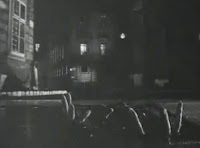
 Perhaps the best part of the entire scene is Harry Lime's frantic bid for escape through the grating of a street gutter where just his finger tips protrude through the grates. Something about this is chilling. From the exterior shots it looks as though some bizarre growth is rising up through the grates - like the children Lime's morphine has been disfiguring. Somehow in these last few moments of his life the audience feels incredible pity for Lime. What he has done is beside the point and we see, in all its striking horror, a man who is terrified of death and so close to freedom that he can feel it. The noise above ground is deliberately louder and more noticeable than the constant rush of water and babble of German, Russian and English. This is done to emphasise how close Lime is to his goal, but also it suggests that even he does escape he'll still going to have to contend with the rushing wind and the lashing rain - a metaphor that tells us that even if Lime does manage to escape the sewers, he is by no means free.
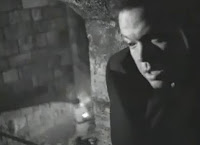 Lime is filmed in a curious way throughout the scene. We feel that as an audience we are following his every move, not just the most important ones. We watch as he stoops through low passages and, in one of the scenes best camera angles, see the real fear on his face as he presses himself against the sewer wall as the police pass him by mere meters away. It is odd to have this much of a connection with a character not introduced until half way through the film. Typically of film noir the lighting is dim and normally from just one single point, throwing one half of Lime's body into sharp relief while the other remains unreadable in the shadows which is perhaps a good enough summary of the scene as any.

In more ways than one the tunnels and the frantic chase through them represent Harry Lime's entire existence. We don't learn much about Lime's life over the course of the film, but from what we do see and hear of his life we can assume it was always a constant and chaotic sprint from authority as he pursued his own leads and his own initiative. In that respect the sewer scene is just Harry Lime's life story sped up into one chase scene that swings near constantly in and out of his favour until eventually he is cornered, arguably through his own blunders and the sheer numbers of police and soldiers that pour into the tunnels after him. Constantly, Lime is chasing after the light at the end of the tunnels, but every time something stands in the way. Whether this representative of an, albeit perhaps fictional, pursuit of an honest existence, hindered by the constant blockades he himself builds around him.

 Perhaps the best part of the entire scene is Harry Lime's frantic bid for escape through the grating of a street gutter where just his finger tips protrude through the grates. Something about this is chilling. From the exterior shots it looks as though some bizarre growth is rising up through the grates - like the children Lime's morphine has been disfiguring. Somehow in these last few moments of his life the audience feels incredible pity for Lime. What he has done is beside the point and we see, in all its striking horror, a man who is terrified of death and so close to freedom that he can feel it. The noise above ground is deliberately louder and more noticeable than the constant rush of water and babble of German, Russian and English. This is done to emphasise how close Lime is to his goal, but also it suggests that even he does escape he'll still going to have to contend with the rushing wind and the lashing rain - a metaphor that tells us that even if Lime does manage to escape the sewers, he is by no means free.
 Lime is filmed in a curious way throughout the scene. We feel that as an audience we are following his every move, not just the most important ones. We watch as he stoops through low passages and, in one of the scenes best camera angles, see the real fear on his face as he presses himself against the sewer wall as the police pass him by mere meters away. It is odd to have this much of a connection with a character not introduced until half way through the film. Typically of film noir the lighting is dim and normally from just one single point, throwing one half of Lime's body into sharp relief while the other remains unreadable in the shadows which is perhaps a good enough summary of the scene as any.
Tuesday, 13 November 2012


Sunday, 11 November 2012
Film Noir
 |
| The Third Man - often considered the conventional film noir |
 |
| A still shot from The Third Man which more or less sums up the traditional camera work and lighting of film noir |
Subscribe to:
Posts (Atom)